
Imprecision detection
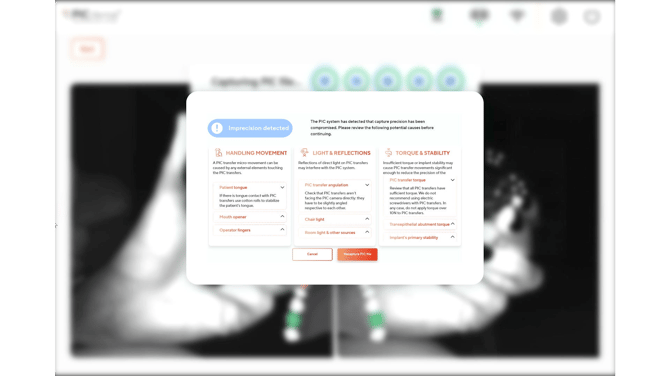
This is one category of potential reasons that can compromise the capture precision which is detected by the PIC system in the interactive detection screen.
There are other possible reasons that can affect precision:
By understanding these additional factors, you can effectively address and rectify any issues before attempting another capture.
MORE INFORMATION: Imprecision detected
Insufficient torque or implant stability may cause PIC transfer movements significant enough to compromise the precision required for a valid PIC file. There are three primary issues that arise in such cases.
PIC transfer torque
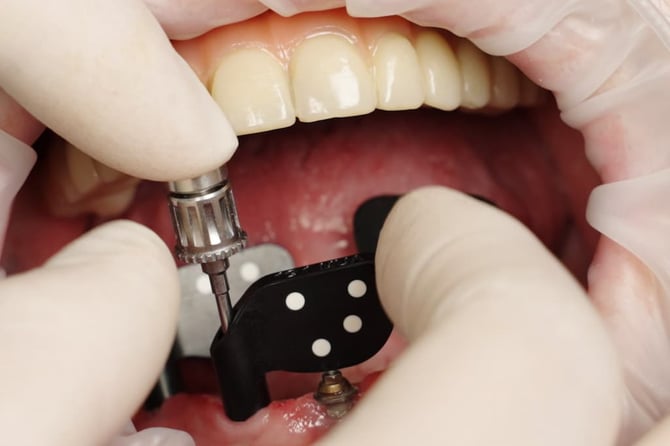
Before a capture, verify all PIC transfers for torque. PIC transfers with the right amount of torque should be fully static, not able to rotate by hand once tightened.
IMPORTANT: The max torque value for the PIC transfers is 10N. Do not exceed this limit under any circumstances. It is also not recommended to use electric screwdrivers with PIC transfers.
Transepithelial abutment torque
Transepithelial abutments can have insufficient torque and cause micro-movements of PIC transfers screwed onto them. They can also loosen over time, for example during the healing period after implant surgery. For these reasons, it is recommended to always check the torque of each abutment before placing PIC transfers.
Implant's primary stability
By carefully assessing and ensuring sufficient primary stability, the implants are better equipped to withstand the functional demands and stresses imposed on them, enhancing their overall performance and durability over time. Always check the primary stability of each implant before placing PIC transfers.